Chọn vị trí của bạn:

Địa điểm

Centralized Lab

How Can Laboratory Centralization Improve Diagnostic Performance?

Across Europe and the Middle East, hospital networks are rapidly expanding into distributed ecosystems made up of inpatient facilities, specialty institutes, and satellite clinics. This model improves access to care but also creates a critical challenge: ensuring consistent, timely, high‑quality diagnostics across locations that are far apart. As complexity increases, many organizations are realizing that fragmented laboratory setups like site‑level labs cannot support the demand for standardized, reliable diagnostics. Centralized laboratories are emerging as a strategic solution. Maintaining small, independent labs at each site leads to variability in standards, workflows, and turnaround times. This is an unsustainable model for modern care delivery and why centralized laboratories are emerging as a strategic solution.

Why Are Hospitals Centralizing Laboratory Operations?

The three top benefits to hospitals for centralizing their laboratory operations include:
  • Cost Efficiency

    Consolidating expensive, high-throughput automated analyzers and equipment reduces the hospital's overall operational costs.
  • Quality Control

    Standardizing procedures under one department ensures strict compliance with medical regulations and consistent testing accuracy.
  • Staff Efficiency

    Maximizing the utility of medical laboratory scientists and technicians means they can monitor multiple automated lines at once.

Even when the laboratory automation system is advanced; manual or inconsistent transport systems weaken the overall diagnostic chain. Studies like those published in the Clinical Chemistry and Laboratory Medicine Journal clearly show that lab consolidation is effective only when supported by predictable, high-throughput, integrated workflows. Yet analysts warn that logistical complexity, especially sample movement, is often the biggest barrier to success. Major events such as Medlab Middle East and ADLM reinforce this point: automation inside the lab must be matched by automation outside it. Without that alignment, even the best analyzers cannot compensate for unpredictable specimen arrivals, delays, or bottlenecks.

What Are the Biggest Challenges of Laboratory Centralization?

As the example above illustrates, laboratory centralization increases logistics complexity by creating a single, high-volume hub that depends entirely on continuous, influxes of specimens from different hospital units. If the transport network fails, the entire diagnostic pipeline gridlocks.

The physical movement of samples from the patient's bedside to the central lab introduces several vulnerabilities that need to be addressed:

  1. Pre-analytical sample degradation: Medical specimens are highly perishable biological materials. Precise temperature regulation is for different specimens and is highly variable. For example, chemistry panels might require room temperature, while arterial blood gases must be transported on ice. Deviations can ruin the sample.
  2. Vibration and mechanical stress: Moving samples across pneumatic tube systems or via physical couriers exposes blood tubes to physical agitation. Excessive vibration can cause hemolysis (the rupturing of red blood cells), which leaks intracellular contents into the serum and invalidates tests.
  3. Strict integrity and stability windows: Certain biomarkers degrade rapidly. For instance, coagulation studies (like PT/INR tests) must be analyzed or processed within precise hourly windows from the moment of draw, when transit delays occur, clinical accuracy is compromised.


An important realization consistently emerges when hospitals plan to centralize their laboratory services: It is impossible to build a successful centralized laboratory without first securing a reliable, modernized transport infrastructure.
Laboratory Centralization
Laboratory centralization

Why Is Transport Automation Essential for a Centralized Laboratory?

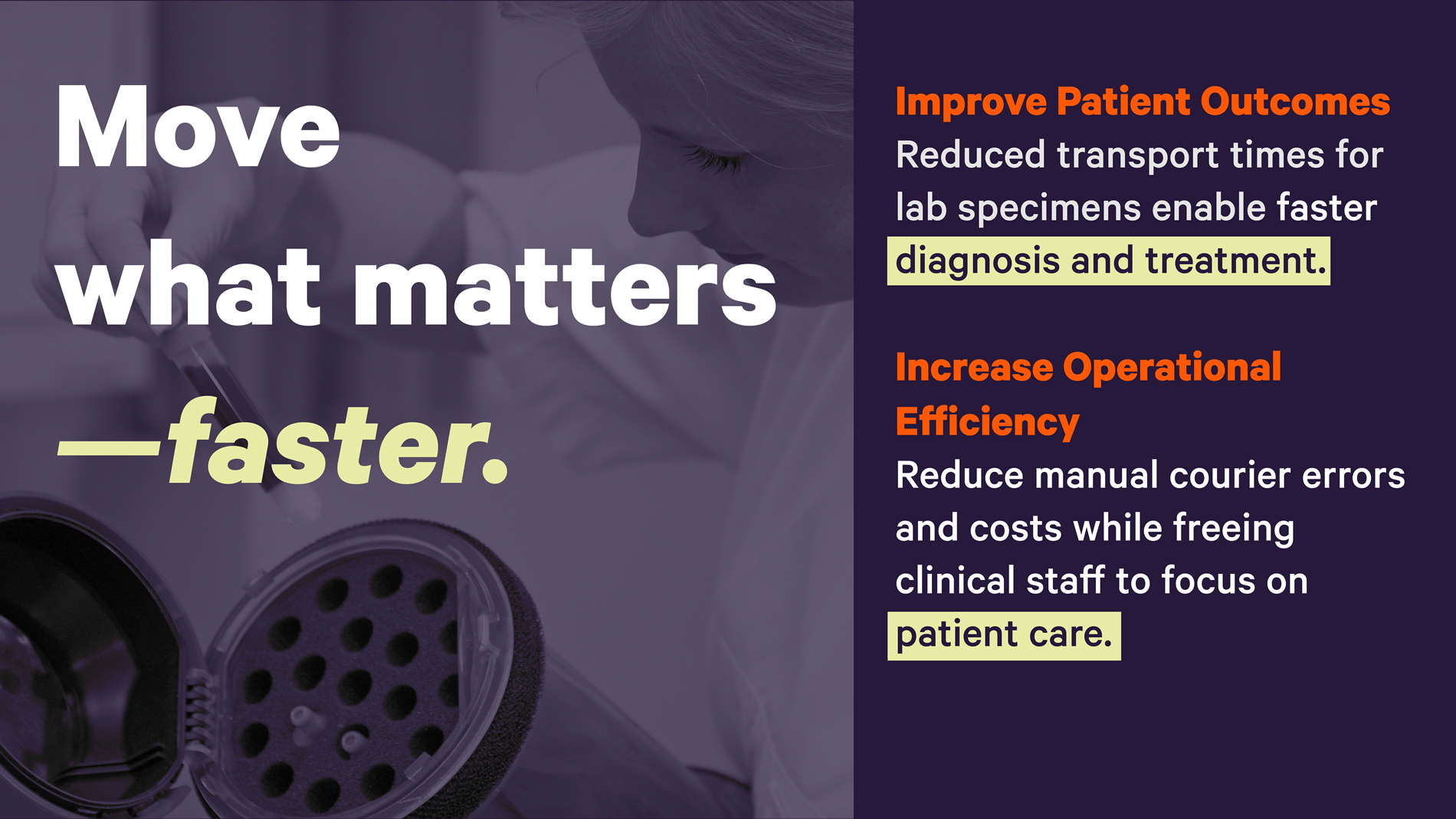
As campuses expand, distances grow. Emergency, oncology, outpatient, and critical‑care units are no longer steps away from the laboratory. A 20‑minute delay in transport can offset the efficiency of the most sophisticated automation. Batch arrivals at peak hours create congestion and make standard turnaround times hard to maintain. When hospitals use a centralized model, clinical teams no longer worry about how samples travel across buildings. Transport is part of the clinical infrastructure.
Lab Centralization in hospitals

Why Does Transport Infrastructure Matter for Laboratory Centralization?

Despite the investment in advanced analyzers, robotics, and digital lab systems, many hospitals still rely on outdated transport processes. Samples may reach their destination via manual courier systems, ad hoc porter routines, or fragmented workflows that differ from one building or clinic to another.

This introduces variability at the start of the diagnostic chain. Even when the lab is prepared to process samples at high speed, their journey from the point of care to the central lab is unpredictable. As a result, the promise of expediency is weakened, not because of technology, but because of the infrastructure surrounding it.

The most reliable transport solution in hospitals has been and still is the pneumatic tube system. The benefits of tube systems can’t be ignored:

  • Near-instant transport between departments and the laboratory
  • Reduced specimen transit times compared to manual delivery
  • Faster test initiation and result reporting
  • Improved responsiveness for emergency and STAT samples


Hospitals must keep their pneumatic tube system working at peak capacity with regular software updates and hardware integration plans. When tube system software is up to date, IT security risks are reduced when regular patches and security upgrades are supported and upgraded. With updated software, the hospital is well positioned to take advantage of new features and ensure compatibility with the latest hardware releases. Because the system is so fast, hospitals can send most temperature-controlled materials that are stored in medical grade refrigerators like Tenutō  Medical Refrigerators & Freezers without concern for waste or contamination.


Managing the volume and tracking of specimens into one facility requires a complex digital and physical infrastructure. Hospitals need to:

  • Implement accurate chain of custody tracking

    Centralization separates the person drawing the blood from the person analyzing it. Hospitals must deploy advanced barcoded electronic tracking systems and radio frequency identification (RFID) to monitor the sample at every transition point, ensuring correct labeling of samples.
  • Address the batching vs. STAT dilemma

    To optimize expensive high-throughput analyzers, central labs prefer batching, running large numbers of similar tests at once. However, emergency departments and intensive care units require STAT, or immediate results. Balancing routine batch efficiency with critical, time-sensitive emergency logistics creates operational friction.

  • Resolve peak-load bottlenecks

    Hospital schedules create logistical tidal waves. Early morning nursing rounds across result in thousands of specimens being sent to the central lab simultaneously. This creates systemic sorting and processing bottlenecks if staffing and automation are not scaled.

How Do Pneumatic Tube Systems, Such as TranspoNet Support Laboratory Efficiency?

TranspoNet is more than a basic pneumatic tube system. It is designed as an integrated transport automation platform that connects the laboratory, pharmacy, and patient care areas while providing visibility, security, and workflow support throughout the specimen journey.

TranspoNet is designed for workflow-driven transport, not just point-to-point delivery. TranspoNet moves lab samples, blood products, medications, and other critical items through intelligent routing and integrated processes. This helps reduce bottlenecks and ensures specimens reach the right destination quickly and consistently.

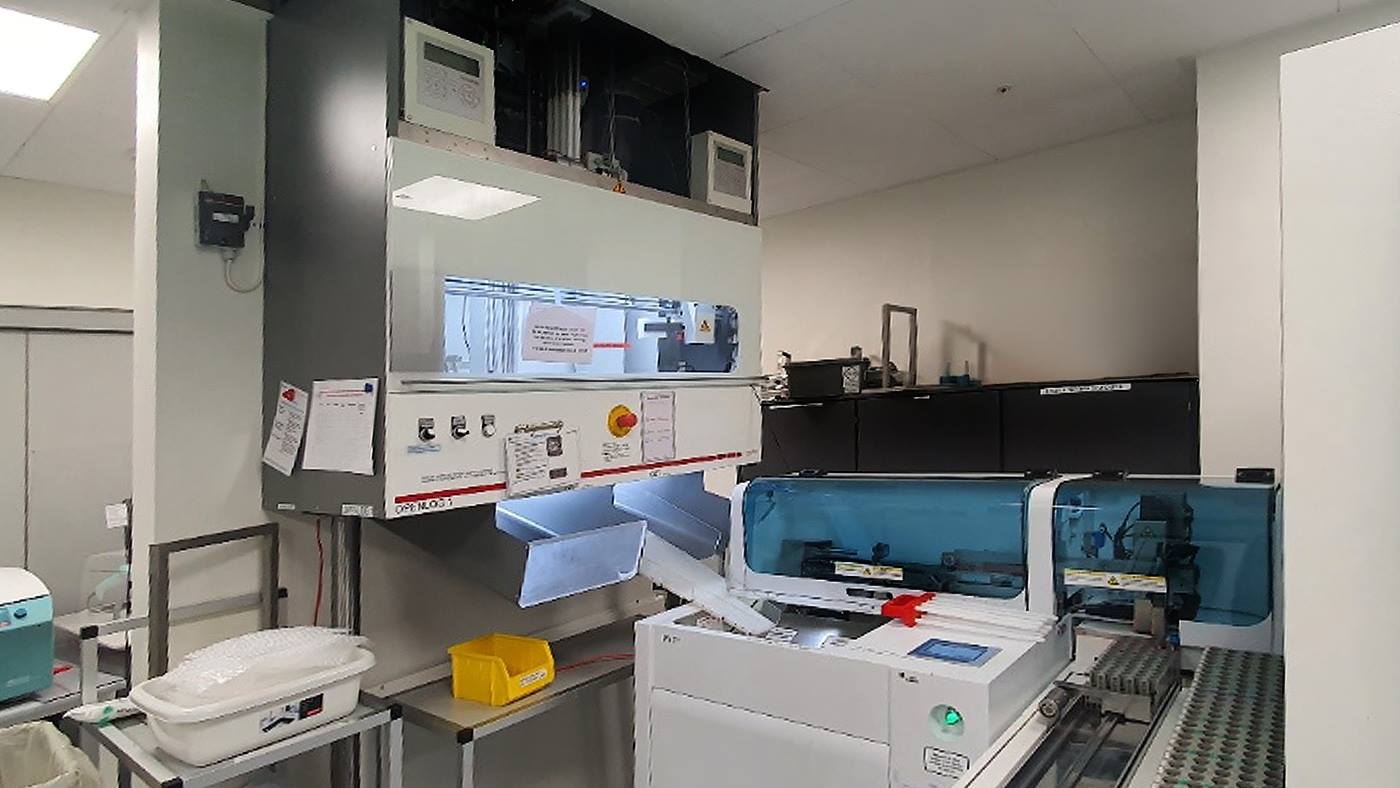
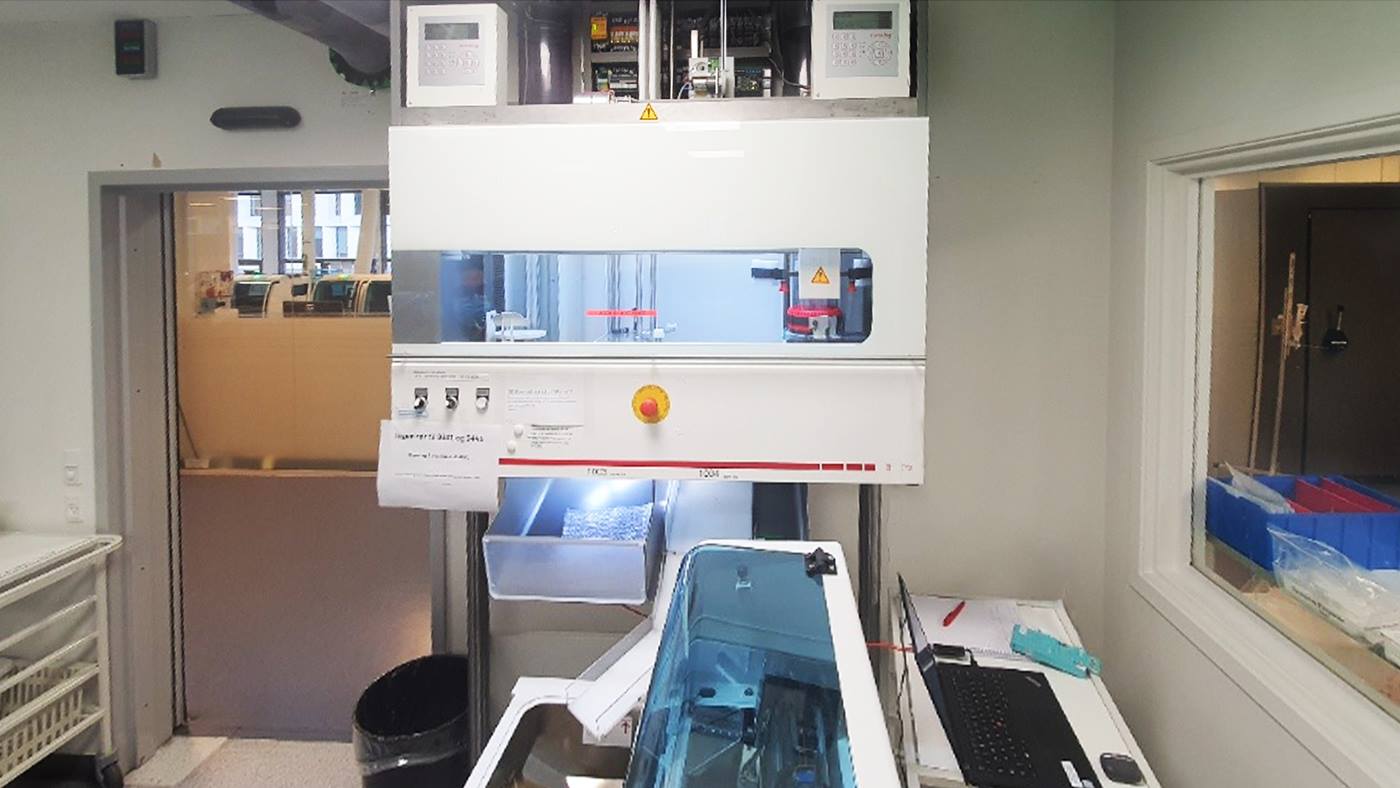
Unlike general-purpose tube systems, TranspoNet includes laboratory-focused receiving stations designed for high-volume specimen handling. Features such as SafetyLock that secures narcotics or SystemBuffer that can temporarily store up to four carriers during peak times.
TranspoNet Lab Centralization

How Did a Danish Hospital Use Transport Automation to Support a Centralized Laboratory?

A hospital in Denmark is a clear example of how transport automation became a strategic enabler for laboratory centralization.

What began in 2013 as a simple connection between one blood‑collection area and the central lab evolved into a campus‑wide transport infrastructure plan designed to support one of Scandinavia’s most complex care environments. As new facilities were added, the hospital faced the challenge shared by many multi-site networks: how to maintain fast, predictable diagnostics across a growing campus.

Rather than decentralizing laboratory operations, the hospital expanded its TranspoNet pneumatic tube system, which is the backbone of its centralized lab model. Over 13 years, the network grew to 114 stations across multiple buildings, which connected routes that were engineered for continuous, high‑volume movement. Redundant powerlines ensure the central lab remained reachable when one route was temporarily offline. This was a crucial safeguard for the hospital because it relied on rapid diagnostics.

Around 500 carriers reached the centralized laboratory every day through this automated infrastructure. Pathology specimens from surgery, medications from the pharmacy, and pediatric workflows also moved through dedicated routes. This hospital recognized an industry truth: a centralized laboratory can only operate effectively when the transport network matched its levels of speed, reliability, hygiene, and integration.

Not only is this hospital’s TranspoNet pneumatic tube system part of its transportation, but it also became an essential part of the hospital’s diagnostic environment. The system ensures safe, protected movement of sensitive specimens and predictable delivery patterns with its laboratory automation. Due to a carefully planned strategy, the hospital’s long‑term expansion goals were realized without compromising workflow consistency.

What Should Hospitals Consider Before Centralizing Their Laboratory Services?

Centralizing laboratory services can improve efficiency, reduce costs, and optimize resources, but success depends on careful planning. Hospitals should evaluate how consolidation will affect specimen transportation, turnaround times, workflow reliability, staffing, and patient care outcomes before making the transition.
TranspoNet Lab Centralization

How Can You Improve Diagnostic Performance Across a Multi-Site Hospital Network?

Learn how our Transport Automation solutions can provide safer, faster, and more efficient hospital workflow. We can help plan for a centralized laboratory or help you maximize the one centralized laboratory you already have.

With Swisslog Healthcare, you gain more than a transport system: you gain a partner who can support your entire hospital with smart, integrated automation designed for the future of care.