Select your location:

Location

Select your language:

  • English
  • English
  • English

Four Ways Automated Tablet Cutting Reduces Medication Waste in Hospitals


Beki Fuller
November 10, 2026
Hospital
Reading Time: 5 min.
Hospital pharmacies are under increasing pressure to reduce operating costs while continuing to deliver safe, high-quality patient care. Today, an estimated 75% of hospital pharmacy departments have been tasked by leadership with identifying new operational efficiencies and lowering expenses.
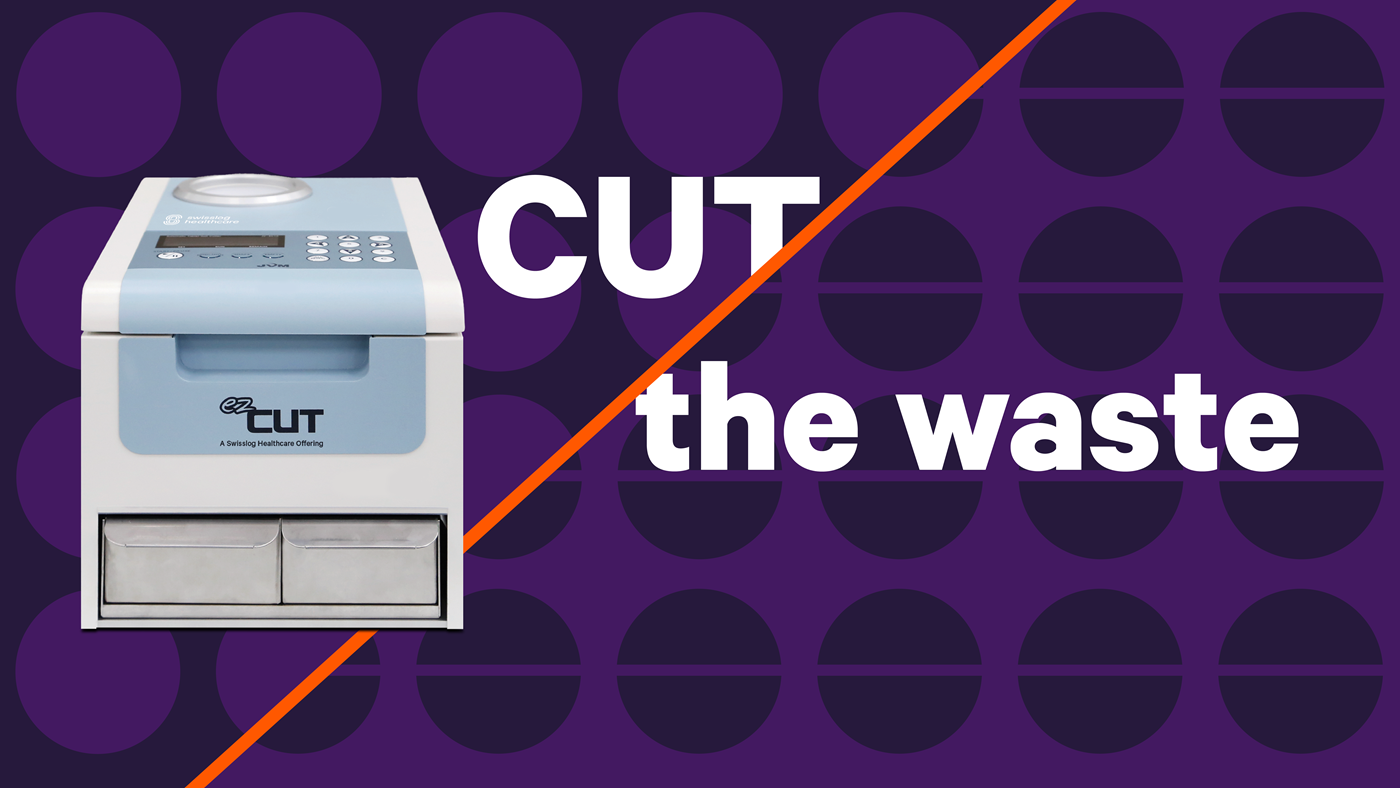
EzCut - Tablet cutting

Many of the opportunities for improvement stem from labor-intensive manual processes, inadequate inventory control, and medication waste. As budgets tighten and staffing challenges persist, replacing manual workflows with automated solutions is no longer simply an operational enhancement; it is a strategic investment that strengthens both financial performance and patient care.

One often-overlooked process that contributes to all three challenges is manual tablet cutting. Research shows that manual cutting is a significant source of medication waste, dosing inconsistency, and unnecessary labor. Studies published in the Journal of Managed Care & Specialty Pharmacy (JMCP) and the International Journal of Pharmacy Practice found that between 8.6% and more than 33% of manually split tablets fail regulatory mass uniformity standards due to crumbling, powder loss, or uneven splitting. These inconsistencies often force pharmacies to discard unusable tablet fragments, increasing medication waste, driving up drug costs, and creating additional work for pharmacy staff.

Here’s how manual tablet cutting can quickly drain a hospital’s resources:

  • Manual Labor Inefficiencies: Pharmacy technicians spend hundreds of hours per year hand-splitting tablets using plastic razor cutters. This creates a severe bottleneck in daily medication preparation, dragging down overall hospital pharmacy productivity and stalling facility throughput.
  • Costly Medication Waste: Manual splitting regularly yields uneven cuts, crushed fragments, and unusable crumbs. Discarding these damaged medications destroys thousands of dollars in drug inventory, making it harder to maintain accurate inventory records. Institutional prioritization of medication waste reduction is critical to protecting the pharmacy's tight bottom line.
  • Preventable Adverse Drug Events (ADEs): Inaccurate manual splits, no matter how slight, mean vulnerable patients receive fluctuating, sub-therapeutic, or toxic doses. This human error increases the risk of preventable ADEs, leading to longer hospital stays and potentially massive malpractice liabilities.
  • High Opportunity Costs: When skilled staff is tied down by manual labor, they cannot support revenue-generating programs. Clinical pharmacists and technicians are pulled away from highly valuable initiatives such as specialty pharmacy services and bedside transition-of-care programs.
ezCUT - Automated tablet cutter

Hospital pharmacy operational efficiency can be greatly improved through automated tablet cutters.

Automating the tablet cutting process transforms a messy, hazardous set of tasks into a standardized, highly efficient, seamless workflow.

Here are four ways in which automated pill cutting reduces medication waste:

  1. Saves valuable time: Automated systems slash processing times, shifting staff hours back to clinical initiatives and boosting hospital pharmacy productivity.
  2. Improves dose accuracy: Standardized mechanical cutting removes human error, ensuring patients receive exact fractional strengths.
  3. Achieves medication waste reduction: Clean cuts minimize fractured pills and drug dust, which is untrackable, keeping expensive inventory intact.
  4. Delivers hassle-free integration: Countertop automation integrates into existing workflows without requiring extensive facility overhauls and costly downtime.


Swisslog Healthcare is helping hospitals optimize efficiency with ezCUT®

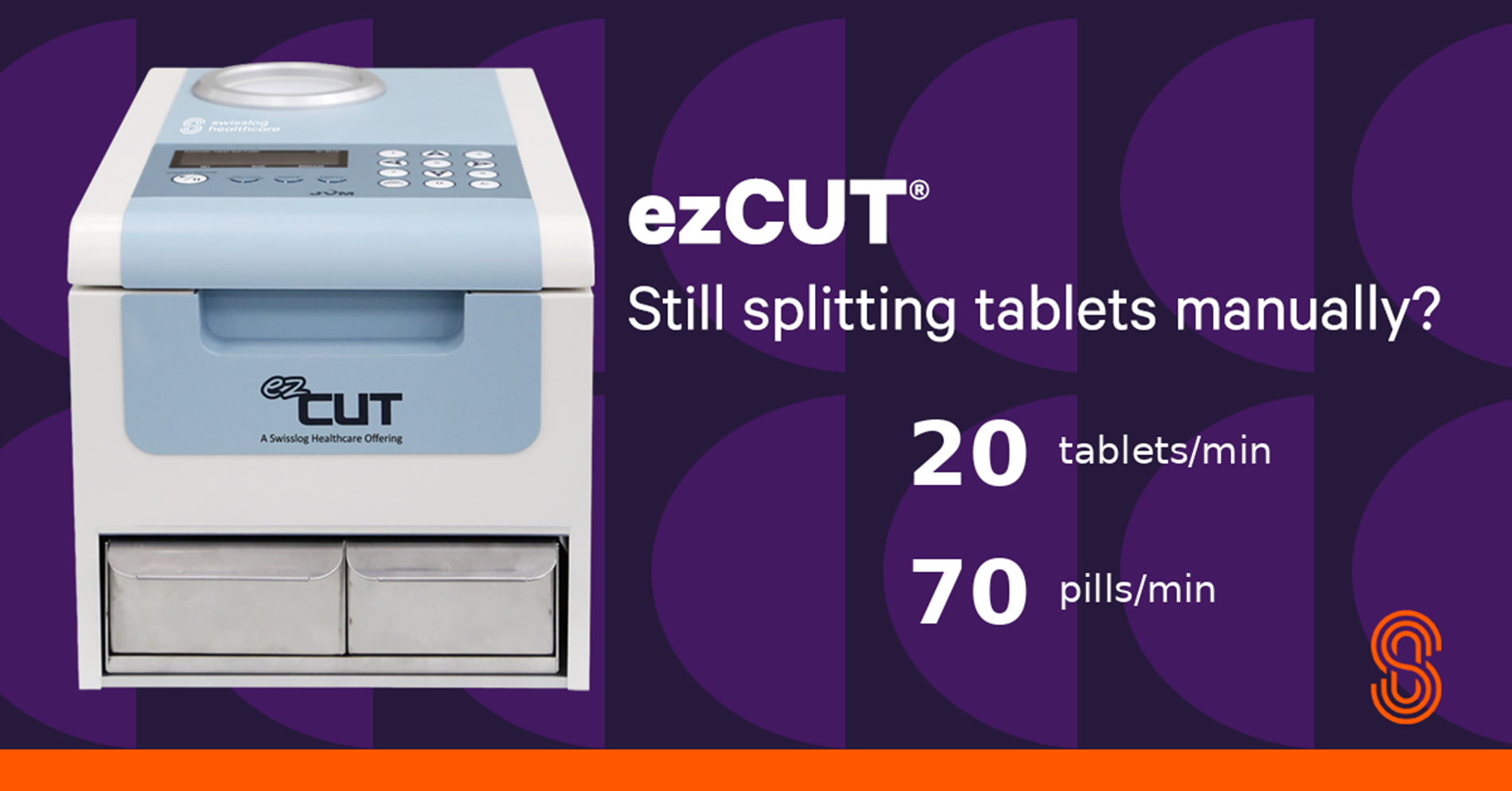
To bridge this operational gap and maximize efficiency, Swisslog Healthcare introduced the ezCUT Automated Tablet Cutter. The ezCUT system is an automated tablet cutter designed to automatically halve tablets for hospital pharmacies, preparing necessary half-strength doses quickly, safely, and cleanly.

Here are some key benefits:

  • Automatic shape recognition: Built-in logic identifies tablet shapes and dynamically adjusts blades for precise geometric splitting.
  • Identifies bad tablets: Optical sensors detect and automatically discard damaged or irregular pills, guaranteeing every dose is uniform.
  • Hygienic processing: The system features cross-contamination guards to maintain strict sanitary boundaries between different medications.
  • No canisters required: Pharmacies can pour bulk round or oblong pills directly from manufacturer packaging without complex calibration.
  • Dual-function operations: The system seamlessly cuts up to 20 tablets per minute.


Hospitals of all sizes gain greater efficiency.

For smaller hospitals, the system provides an affordable, low-risk entry point to pharmacy automation without requiring a major capital investment. For larger hospitals and health systems, its compact tabletop design helps streamline high-volume tablet splitting, reduce medication waste, optimize inventory management across extensive medication inventories, and lower inventory carrying costs.

Transitioning to an automated tablet cutter is an investment in your workforce and your patients.

For hospital leadership, eliminating a manual, repetitive task reduces technician burnout and allows pharmacy staff to focus on higher-value clinical responsibilities. At the same time, precise automated tablet cutting improves dose consistency, helping reduce the risk of medication errors, enhance patient safety, and minimize potential liability.

As hospitals continue to face mounting financial and staffing pressures, each improvement to the workflow can have a meaningful impact. Automated tablet cutters, such as ezCUT, increase hospital pharmacy productivity by reducing waste, improving operational efficiency, and supporting more consistent medication preparation. In an environment where every dollar and every hour matters, it represents a practical, cost-effective step toward a more efficient, resilient pharmacy operation.

About the author Beki Fuller
Senior Product Manager

More about Beki Fuller
Search more tags
Point of CareIntralogisticsUnit DosePharmacy AutomationDigitizationPharmacists InsightsInterviewClosed Loop Medication ManagementTransport AutomationPneumatic Tube SystemNew WorkPatient SafetyPurple JourneyHospital PharmacyFuture PharmaciesHRHospital PlanningCold chain managementModernization