Hospital pharmacies are under increasing pressure to maintain medication availability and safety while managing staffing constraints, space limitations, and growing operational demands. For smaller hospitals, these challenges can be particularly pronounced. And yet, large-scale automation may not always be practical. There are, however, opportunities to introduce targeted automation where it can have a meaningful impact.
Unit-dose medication packaging systems are a good example of targeted automation that can support existing processes by improving pharmacy workflow efficiency and providing greater flexibility. Unlike larger, centralized systems, they don’t require the footprint or investment associated with them.
Smaller medication packaging systems bring several advantages to the hospital pharmacy.
Rather than simply scaling down the footprint of larger automation platforms, smaller unit dose packaging systems can address specific needs that might otherwise require extensive manual work. Because they are semi-automated, they do not eliminate all manual interaction. These systems are designed to automate repetitive, time-consuming, and error-prone tasks within the workflow, allowing pharmacy staff to focus their time and attention on higher-value tasks and responsibilities.
For example, a smaller medications packager can improve the following:
- Automation feeding: Converting bulk stock into scannable unit-dose packages for downstream robotic dispensing systems.
- Cart-fill activities: Repackaging bulk medications into unit-dose formats for nursing unit cart exchanges and the hospital’s periodic automatic replenishment levels.
- Non-formulary and short-dated medications: Handling low-volume, odd-lot, or soon-to-expire medications that may not justify a run through a central packaging operation.
- Backup capacity: Providing an alternative packaging resource during equipment downtime or at smaller satellite pharmacy locations.
Smaller drug packager systems also support specialty packaging needs.
Hospital pharmacies may occasionally encounter medications that do not fit easily into high-volume, standardized packaging workflows. These may include pediatric doses, hospice medications, investigational drugs, split doses, and other patient-specific requirements that require a different approach.
A smaller unit-dose packaging machine can provide additional flexibility in these situations. Because the equipment is designed for lower-volume or specialized applications, pharmacies can package medications as needed without necessarily dedicating capacity to a larger system.
For smaller hospital pharmacies, this can help:
- Make better use of limited staff resources
- Reduce unnecessary medication waste
- Manage specialty and lower-volume medications more efficiently
- Maintain a more reliable supply of unit-dose medications
- Introduce automation without requiring significant additional space
These systems can also be used to complement an existing packaging system.
Smaller packaging equipment can also play a role in hospitals that already use larger automation systems. Instead of viewing a compact system as an alternative to centralized packaging, pharmacy leaders can use them to complement existing capabilities.
For example, a smaller system may provide additional capacity during periods of peak demand or help manage medications not routinely processed by a larger medication packaging system. It can also provide a degree of redundancy when a primary packaging system is unavailable.
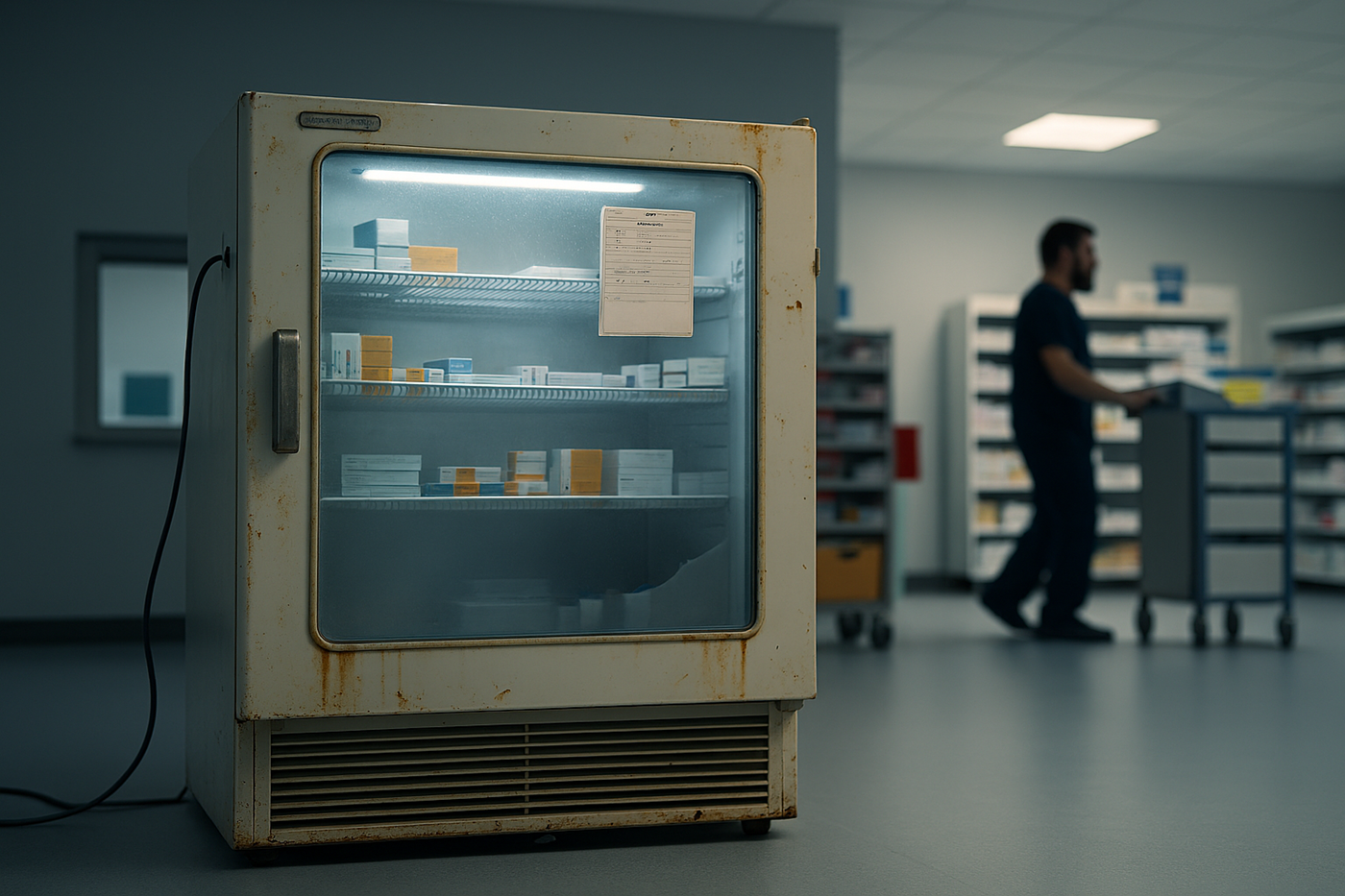
Certain medications may also require separate storage and handling, including those maintained in locked storage due to their characteristics or regulatory requirements. Having packaging capabilities that can accommodate these workflows may provide additional operational flexibility.
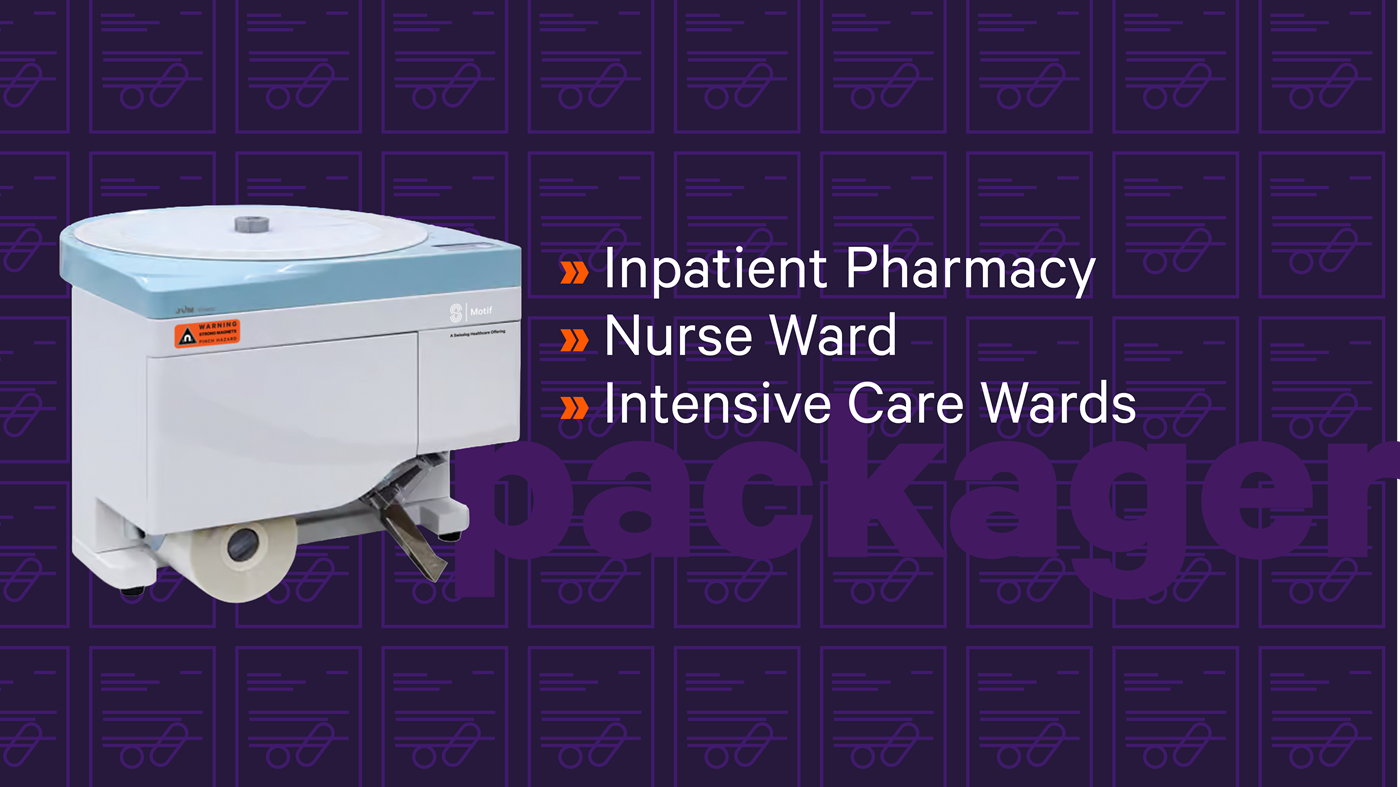
Swisslog Healthcare’s Motif® semi-automated packager delivers accuracy, adaptability, and performance.
An excellent example of a semi-automated approach to medication packaging for smaller hospitals is Swisslog Healthcare’s Motif®. This specialized system is designed for pharmacies with limited space, and its semi-automated operation can reduce the repetitive, time-consuming manual work associated with unit-dose packaging.
Benefits to smaller hospitals using a Motif® packaging system include:
- Footprint: A compact tabletop design, which is essential where dedicated equipment space is limited.
- Ease of use: A straightforward interface, which reduces the amount of training required for pharmacy staff.
- Consistency: Standardized packaging processes to help support accuracy and uniformity.
- Maintenance: Easy to clean and maintain, saving time during daily operations.
- Flexibility: Ability to handle different packaging requirements, highly beneficial when medication volumes and priorities change.
Small-scale medication packaging systems offer a practical, effective approach to pharmacy automation.
For senior pharmacy leaders, automation decisions should be evaluated in the context of the entire medication-use process. The most effective solution will take into consideration medication volume, staffing, available space, existing equipment, workflow requirements, and capital resources.
Tabletop unit-dose packagers offer a much-needed incremental approach to automation, allowing smaller facilities to gain experience with automation without making a major change to their overall pharmacy infrastructure. This practical approach to pharmacy automation works because it evolves dynamically rather than requiring a complete transformation of existing workflows.
Ultimately, these systems can be a game-changer for hospitals seeking to reduce repetitive work, support standardized processes, make better use of staff time, and provide reliable medication preparation and dispensing for patients.
About the author Beki Fuller